Artist as Advocate
An artist-led peer support group with a focus on the climate and ecological crisis – understood through an intersectional lens
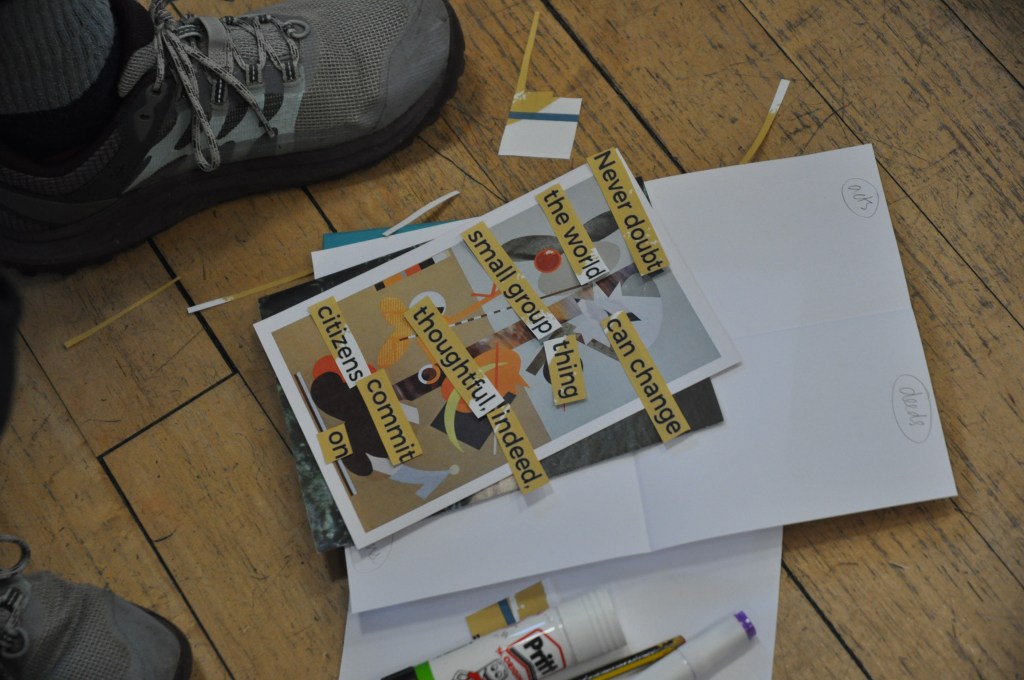
New programme overview:
Place Work Folk
Monthly meet-ups and workshops for Edinburgh-based artists (all disciplines and cultural workers included), to support individuals and collectives committed to addressing the climate and ecological crisis in their practice. The project seeks to inspire and sustain a network of artists, encourage collaborations across disciplines, and, where appropriate – and subject to future funding – embed artists in local communities.
When:
Nov 10th, Dec 8th, Jan 12th, Feb 9th, March 23rd – times vary (see below)
FREE: TRAVEL EXPENSES PAID – LUNCH PROVIDED
Supported by
ECCAN (Edinburgh Communities Climate Action Network)
Guiding questions:
- How can artists (of all disciplines) respond to the climate and ecological crisis in their practice?
- How does the climate and ecological crisis intersect with other social, political and economic practices?
- What support do artists need to address the climate and ecological crisis in their practice?
- Given appropriate support, what projects would participants from the programme like to take forward?
Meet-up 1:
When: Nov 10th, 10am-2pm / Where: Fruitmarket Gallery
What: Guided tour of Juane Quick-to-See Smith’s posthumous exhibition, Wilding, at the Fruitmarket Gallery, followed by an informal conversation with members of the Fruitmarket team about their ecological programming and circular economy. Followeed by an informal lunch, personal introductions and an overview of the Artist as Advocate programme led by Jonathan Baxter, Jenny Pope and Hazel Darwin-Clements (including opportunities to shape the programme as it develops).

Meet-up 2:
When: Dec 8th, 10am-2pm / Where: Scottish Storytelling Centre
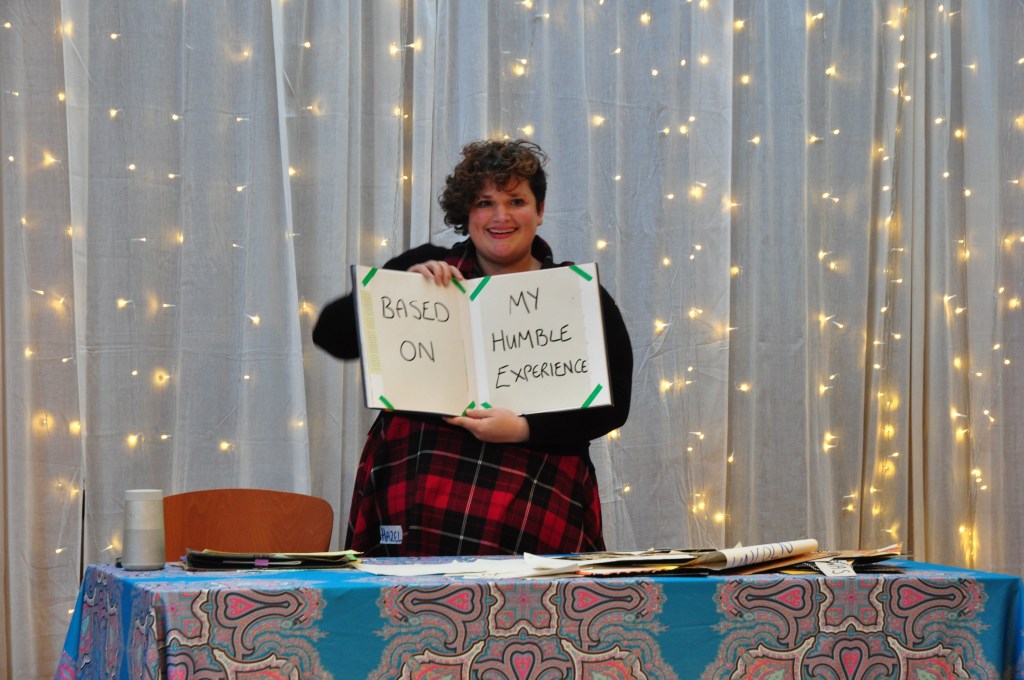
What: Based at the Scottish Storytelling Centre, this session focuses on storytelling (when applied across disciplines). Inspired by the concept of Thrutopia, theatre-maker Hazel Darwin-Clements will help us reflect on the power of stories as a framing tool for our engagement with the climate and ecological crisis. Includes lunch, discussion and lots of creative play.
Meet-up 3:
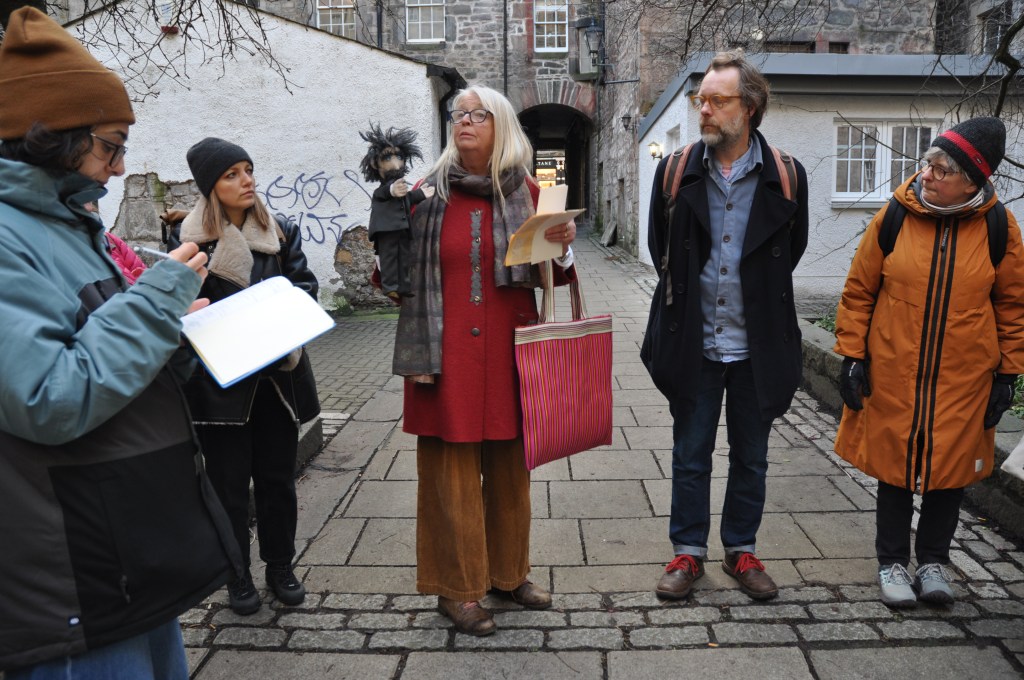
When: Jan 12th, 10am-4pm (extended session) / Where: Meeting at the Scottish Storytelling Centre, walking to Riddles Court, with lunch and workshops at Edinburgh Quaker Meeting House
What: A guided tour inspired by the life and work of Patrick Geddes and his colloborative regeneration of the Old Town, led by Claudia Zeiske; includes a tour of Riddles Court. Followed by lunch and an extended workshop led by Helen Boden and Jonathan Baxter. The aim of this workshop is to start developing a creative manifesto for artists engaged in the climate and ecological crisis – taking inspiration from Geddes’ Notation of Life diagram and other artistic (and intersectional) manifestos.
Meet-up 4:
When: Feb 9th, 10am-2pm / Where: St Mary’s Episcopal Cathedral, A+E project space and Song School
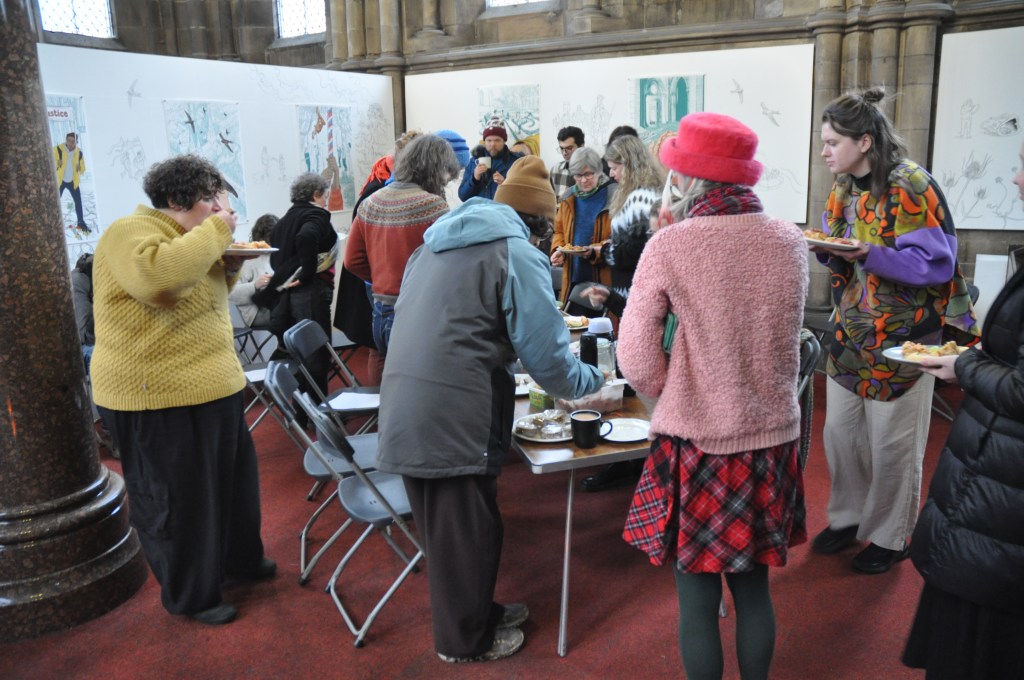
What: This session asks ‘Where are we walking?’ and ‘How do we ground our practice?’ We’ll be working with Tamsin Grainger, a walking artist and Chi Gung practioner, and we’ll be visiting the Phoebe Anna Traquair murals in the Cathedral’s Song School to share our own creative practoce and vision. Includes a potluck lunch.
Meet-up 5:
When: March 23rd, 10am-2pm / Where: Royal Botanic Garden Edinburgh
What: Site visit to Royal Botanic Garden Edinburgh and the Earth Matters exhibition at Inverleith House. Includes an artist talk and walk with Natalie Taylor – whose work explores soil health. Followed by lunch and a final ‘round-up’ of what we’ve learnt over the last 5 months and what we’d like to take forward.
Join the programme
Given the nature of the above programme, we welcome enquiries from artists and performers at any stage in their career. However, we require sign-up for at least three of the meet-ups (with a preference for participation across all five meet-ups). We understand that freelance artists, and artists working in other jobs to support their practice, may find regular Monday meet-ups difficult. Future meet-ups will bear this in mind. If childcare is an issue, please raise this concern and we’ll seek to address it through ECCAN’s participation fund. We welcome questions/clarifications in advance of any commitment but we do require sign-up in advance. Selection will be made based on your attendance commitment and a 200 word (max) summary of why you would like to participate in these events. (This summary will also help us shape the programme.) Please include links to online examples of your work, if appropriate. Don’t be shy and don’t be intimidated, we’ll do our best to welcome all enquiries – although participation numbers are limited.
Please send emails with accompanying information to Jonathan Baxter via
Previous programme:
2024-25: Fortnightly meet-ups on a Thursday, 7-9pm
Where: A+E project space, the Chapter House, St Mary’s Episcopal Cathedral, Edinburgh, with fieldtrips by arragement.
Open to all – subject to prior enquiry or invitation.
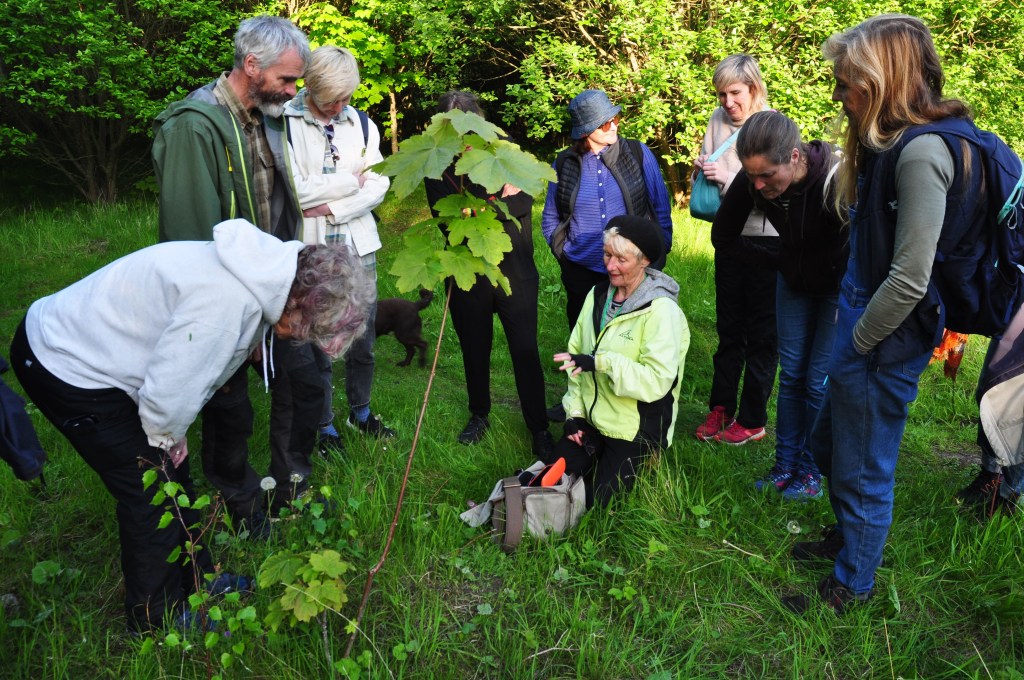
Background info:
In September 2022 Jenny Pope and Jonathan Baxter had an interesting conversation on Portobello beach. Jenny had worked as a hospital-based mental health advocate and Jonathan had an interest in the concept of Artist as Advocate. Naturally the conversation took an advocacy turn.
The Artist as Advocate concept isn’t new. Suzi Gablik explored the concept in her book, Conversations before the End of Time (available from the A+E library), and it was briefly in vogue within art criticism circles, parsed as ‘advocate criticism’ vs ‘stroller criticism’.
The conversation between Jenny and Jonathan led to further discussions about bringing together a small group of artist peers with a common concern for the climate and ecological crisis. Participants wouldn’t be limited by discipline – not just socially engaged artists or artists whose work explicitly addresses social and ecological themes. Instead, we envisaged a more diverse group of practitioners – visual artists, poets, curators, dancers etc. – interested in supporting one another in their work.
On the 22nd February 2024 we invited a small group of artists to join us. Since then the group has grown. Boundaries are porous and we remain open to other artist advocates!
The overall intention of the group can summarised as follows:
1. to gather artists who recognise the gravity of the climate and ecological crisis – its causes and likely outcomes, both locally and globally
2. to provide a safe space to talk about these issues and how they impact on our self-understanding as artists and the work we make – whether that work relates directly or indirectly to the climate and ecological crisis
3. to share skills with one another and to further develop our own practice
4. to cultivate friendship and to see what grows …
If you’d like to join us, or if you have further questions, please send Jonathan an email.
 A+E
A+E 